
- Home
- /
- Procedures
- /
- Lymphedema

Lymphedema
Lymph node transfer
Healthy lymph nodes for the areas affected by edema. Connected to the circulation microsurgically.
Suitable for
- Advanced-stage lymphedema
- Affected areas such as the armpit or groin
Background
What is lymphedema?
In lymphedema, lymphatic fluid builds up in the tissue because the lymphatic system can no longer drain it adequately. The arm or leg swells and feels heavy and tight, and over time the tissue can harden.
Lymphedema most often develops after cancer treatment, when lymph nodes have been removed or irradiated (secondary lymphedema). Less often, the lymphatic system has developed differently from birth (primary lymphedema).
The basis of treatment is lymphatic drainage and compression. Surgery may be considered if this treatment is not sufficient. Whether a procedure is suitable, and which one, depends on factors such as the stage and is clarified in the consultation.
Your path
From your inquiry to aftercare
The same steps for every procedure. What applies specifically to this procedure is highlighted.
- Schritt 01
Your inquiry
Via the contact form, for your individual inquiry. Prof. Aung will get back to you as soon as possible.
- Schritt 02
Personal consultation
Individual consultation without time pressure. It starts with your wishes and questions.
- Schritt 03
Individual planning
The procedure is tailored to your personal circumstances, not to a standard template.
Lymph node transfer - Schritt 04
Information & decision
The process, risks and alternatives are discussed calmly. You make the decision.
- Schritt 05
Your procedure
At one of the three surgery locations, minimally invasive wherever possible.
Lymph node transfer- An intact package of lymph nodes is removed together with its artery and vein.
- It is connected to the circulation in the affected area, for example in the armpit or groin.
- This restores lymphatic drainage and counteracts further edema.
- Afterwards: elevation and bandaging for good decongestion.
- Schritt 06
Aftercare
Scheduled check-ups, tailored to your procedure.
Lymph node transfer


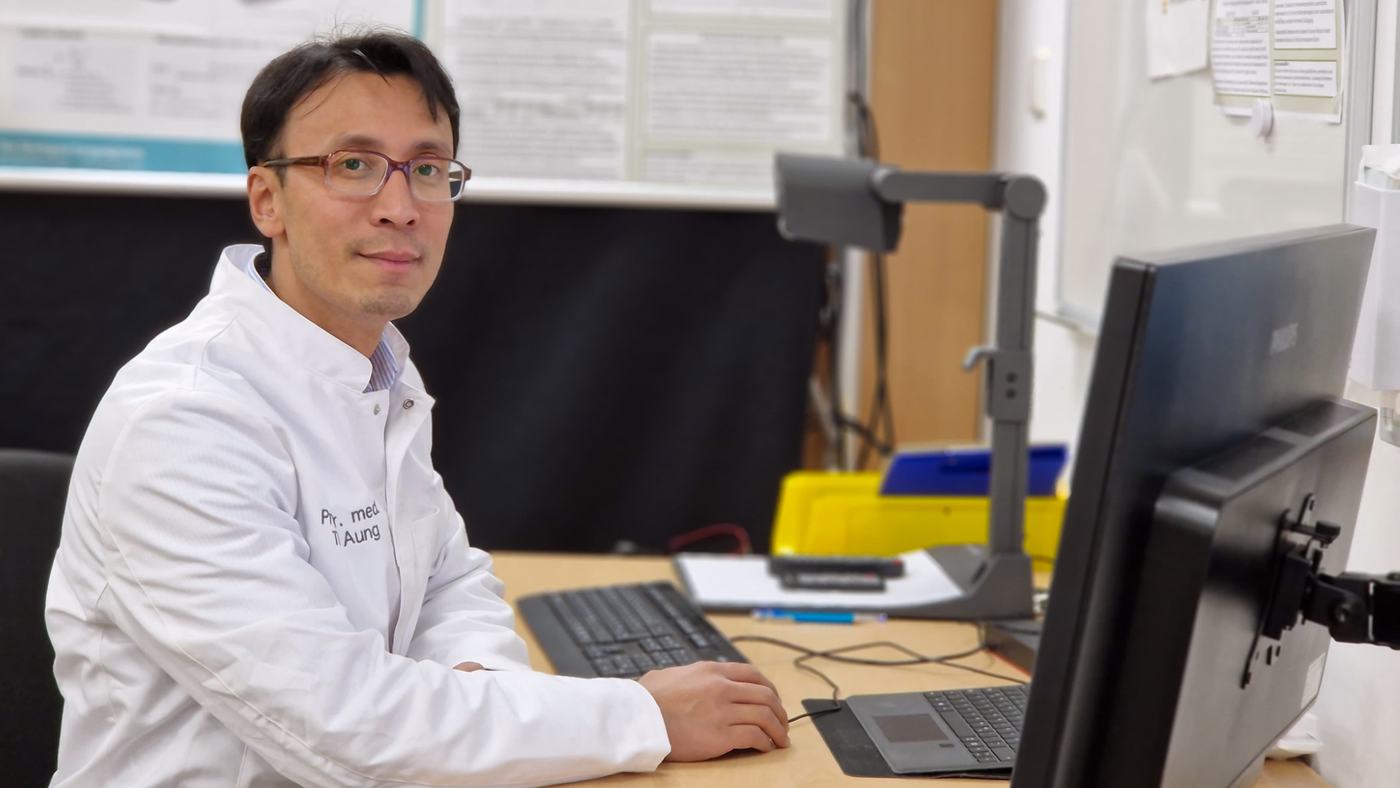
I use a wide range of different operations […]. This allows me to respond individually to the needs of my patients […].
Patient story
What patients say
Questions
Frequently asked questionsGood to know
How restricted will I be afterwards?
The donor site must not be put under strain for 4–6 weeks, and no pressure may be applied to the recipient site for 4–6 weeks. You continue the conservative therapy after consulting the surgeon.
Wer meldet sich nach meiner Anfrage?
Prof. Aung will get back to you as soon as possible.
Übernimmt die Krankenkasse die Kosten?
That depends on the type of procedure. During the consultation we always discuss what kind of procedure it is and whether it can be covered by health insurance.
Wo wird operiert?
At three hospitals: Kliniken Am Goldenen Steig in Freyung, Klinik am Isar Park in Plattling and Klinikum Weiden.
Wie lange falle ich nach der Operation aus?
That depends on the procedure. Each procedure page lists the operating time and length of stay.
Request a
Questions about this procedure?
 Personal replyAs soon as possible
 Individual consultationNo time pressure
 Open, honest and without pressureIn a calm and respectful setting
Related